
Free Pizza Isn’t a Strategy: The Campus Event Ideas College Students Actually Show Up For
You booked the room. Then you ordered 20 pizzas and made the flyer.
Eleven students showed up.
Six grabbed a slice and left before you finished the welcome.
Sound familiar? You’re not bad at your job. The playbook is broken.
Here’s the strange part. In fact, college students have never been lonelier. More than half say they feel lonely, according to a 2026 study of nearly 65,000 students across 120+ colleges.
They want connection. They’re just not finding it at your events.
This post breaks down why, and what students actually show up for.
Key Takeaway: Over half of college students report feeling lonely, yet most never attend a campus event. The campus event ideas that work share five traits: students can make something, keep something, join solo, share it online, and find it where they already are.
The Attendance Problem Is Bigger Than Your Event
If your turnout is low, you have company.
A majority of college students will never attend a campus-sponsored event. That’s around 60% at four-year colleges and 84% at two-year and commuter campuses, according to a campus engagement expert quoted by Inside Higher Ed.
So why do they skip? Inside Higher Ed’s Student Voice survey asked directly:
- 41% said timing and location. The event was at the wrong time, in the wrong place.
- 31% didn’t know it existed. The flyer never reached them.
- 18% said they felt like they didn’t belong. Nearly 1 in 5 students stayed home because walking in felt awkward.
That last number is the one to sit with. Almost a fifth of your campus isn’t skipping out of boredom. They’re skipping because they don’t know who they’d talk to.
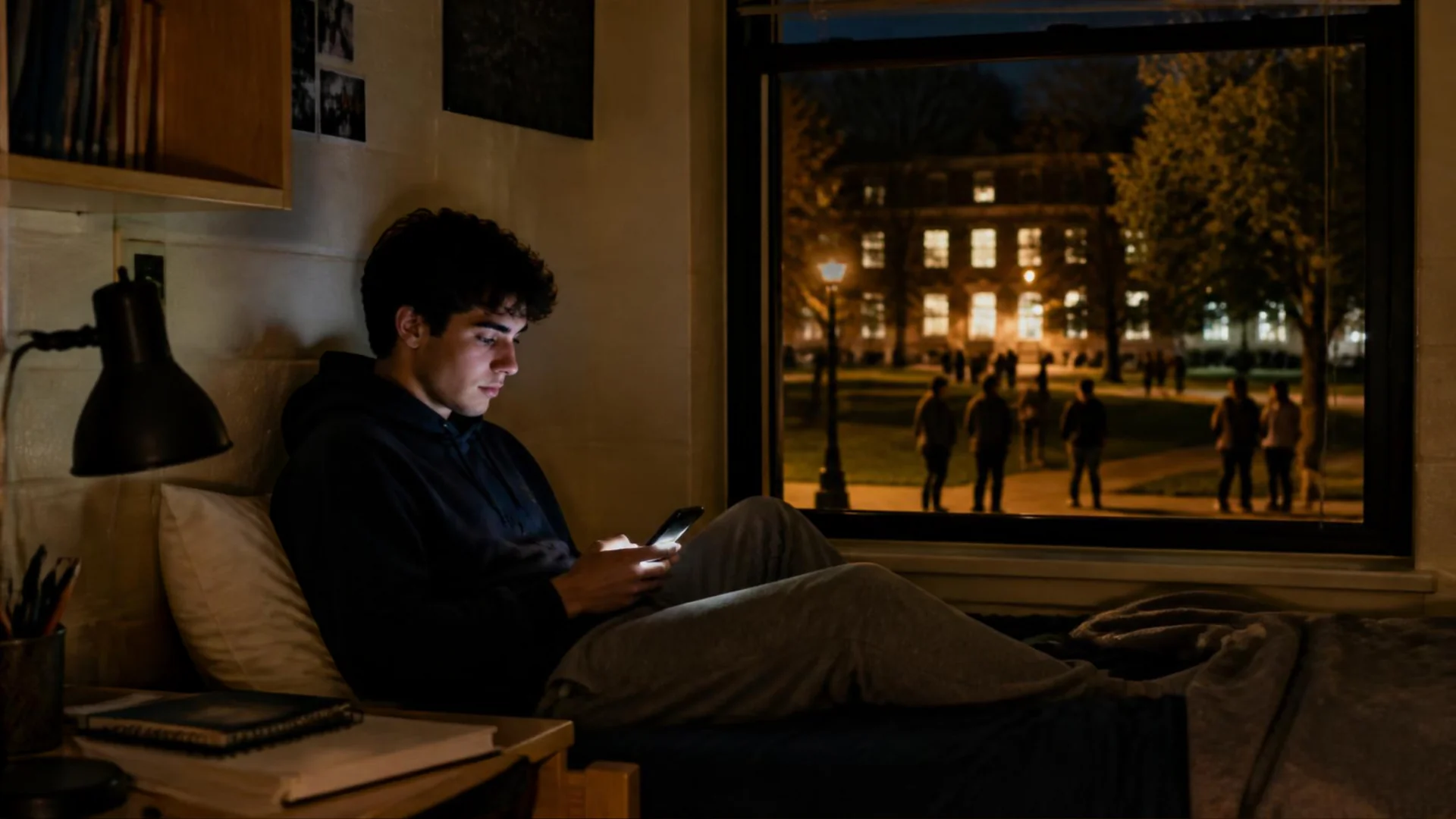
Your Real Competition Isn’t Another Event. It’s the Dorm Room.
Students aren’t choosing between your event and a better one.
They’re choosing between your event and their phone.
That same 65,000-student study found that students who spent 16+ hours a week on social media had significantly higher odds of loneliness. That’s just over two hours a day.
The study found something else worth noticing. Fraternity and sorority members were among the least lonely students. The researchers pointed to one likely reason: more opportunities to gather.
That’s the whole game. Students who have somewhere to be, with people to see, are less lonely. Your events can be that somewhere for the students who didn’t rush Greek life.
This Is a Retention Problem, Not a Fun Problem
If you need budget for spring programming, this is the section to screenshot for your dean.
Loneliness doesn’t just hurt students. It hurts enrollment numbers.
- Belonging now ties with cost as a reason students consider leaving. In the Lumina Foundation-Gallup 2025 State of Higher Education Study, 24% named belonging concerns, the same share that named cost.
- Lonely students are less likely to recommend their school. That’s from Trellis Strategies’ February 2026 report, which found 57% of students feel lonely at least sometimes.
Read that first one again. A student feeling like they don’t belong is as big a dropout risk as tuition.
Campus events aren’t a line item for fun. They’re one of the cheapest retention tools on campus.
What Students Actually Show Up For: 5 Traits of Campus Events That Work
Free food still matters. It gets people in the door.
It just doesn’t make them stay, talk to anyone, or come back. The events that do share these five traits.
1. Students can make something.
Gen Z is going analog. YPulse’s 2026 “Going Analog” trend report found college students are leading the movement toward offline hobbies and in-person experiences. Hands-on beats watch-and-clap.
2. They leave with something that’s theirs.
Generic swag goes in the trash. We’ve written about why 90% of event swag ends up in trash bins. A custom item with their name or design on it goes on their body, their bag, or their dorm wall.
3. They don’t need a friend to go.
Remember that 18%? Solo students need a low-pressure way in. Drop-in formats with a line work well here, because a line gives strangers something to talk about. More on that in The Line Is the Activation.
4. It shows up on Instagram before it’s over.
Students find events through group chats and friends’ stories, not email. A personalized, photogenic item gets posted, and that post is your marketing for the second half of the event.
5. It happens where students already are.
If 41% skip because of timing and location, stop asking them to come to you. Go to the student union at lunch. The quad between classes. The residence hall lobby at 8 PM.

Campus Event Ideas That Hit All Five
Map these to your calendar. Spring booking season is now.
- Welcome Week drop-in stations. Set up in the busiest walkway on campus. First-years meet people while they wait in line.
- Homecoming custom gear. Students get school colors and their name painted on a hat or tee. It gets worn at the game and posted by halftime.
- Midterm and finals de-stress breaks. A 15-minute hands-on break beats another therapy dog lecture for students who are “wellness’d out.”
- Winter beanie drop. Cold weather plus custom headwear. It’s practical, personal, and worn every day until March.
- Residence hall nights. Bring the event to the building. Commuter and first-gen students often need the easiest possible on-ramp.
- Club and org fairs. A live activation anchors foot traffic, so every table nearby gets more visitors.
- Senior send-off. A custom keepsake from their last semester. Class of 2027 on a hat they’ll actually keep.
What It Looks Like on a Real Campus
In January 2026, the University of Missouri’s Campus Activities Programming Board hosted a custom airbrush beanie event during Social Involvement Week.
Students picked their colors, lettering, and style. Professional airbrush artists painted them on-site in the student center.
150 students registered. For a three-hour drop-in on a Friday in January.
It hits all five traits: students helped design it, walked away with it, didn’t need a friend to join, had something photo-ready, and found it in the student center.
Where Live Airbrush Art Fits In
Full transparency: this is what we do.
Airbrush Events brings professional artists to campuses nationwide. We paint hats, tees, totes, and beanies live, customized with student names, school colors, and designs.
Why it works for campus programming:
- It creates a line, and the line creates conversation. Solo students have an instant icebreaker.
- Every student leaves with something one-of-a-kind. Not a stress ball. Something they’ll wear.
- It’s built for volume. Our artists work fast, so a busy lunch rush doesn’t turn into a two-hour wait.
See how it works on our school and college events page.
Campus Event FAQs
Students show up for events that are hands-on, easy to join alone, and held where they already spend time. Events where they make or customize something they can keep tend to outperform passive events like lectures or movie nights.
Hold events where students already are, at times that fit between classes, and promote them through Instagram and group chats rather than email. Add a tangible takeaway and a low-pressure drop-in format so students don’t need a friend to join.
In the 2025 Lumina Foundation-Gallup study, belonging concerns tied with cost as a reason students consider leaving college. Campus events that build real connection help students feel they belong, which supports persistence.
A 2026 study of nearly 65,000 students across more than 120 colleges found 54% reported feeling lonely. Students who spent 16 or more hours a week on social media had significantly higher odds of loneliness.
The Bottom Line
- Over half of students are lonely. Most still never attend a campus event.
- Belonging is a retention issue. It now weighs as heavily as cost.
- Pizza gets them in the door. Making something, keeping something, and meeting someone gets them to stay.
Your one action item: Before you finalize spring programming, pull last semester’s event list. Circle every event where students stayed longer than 20 minutes. Book more of those.
Want an event students line up for? Get a free quote for your campus.