
TL;DR: Somewhere between 15 and 20% of people are neurodivergent, and many skip events because they expect to get overwhelmed. Sensory-friendly corporate events fix that with low-cost moves: a real quiet room, advance warnings, noise zoning, and vendors who can adapt. Google and Marriott already made this standard.
Your event has a sound check.
It has a lighting cue. A playlist. Maybe a confetti cannon for the CEO’s walk-on.
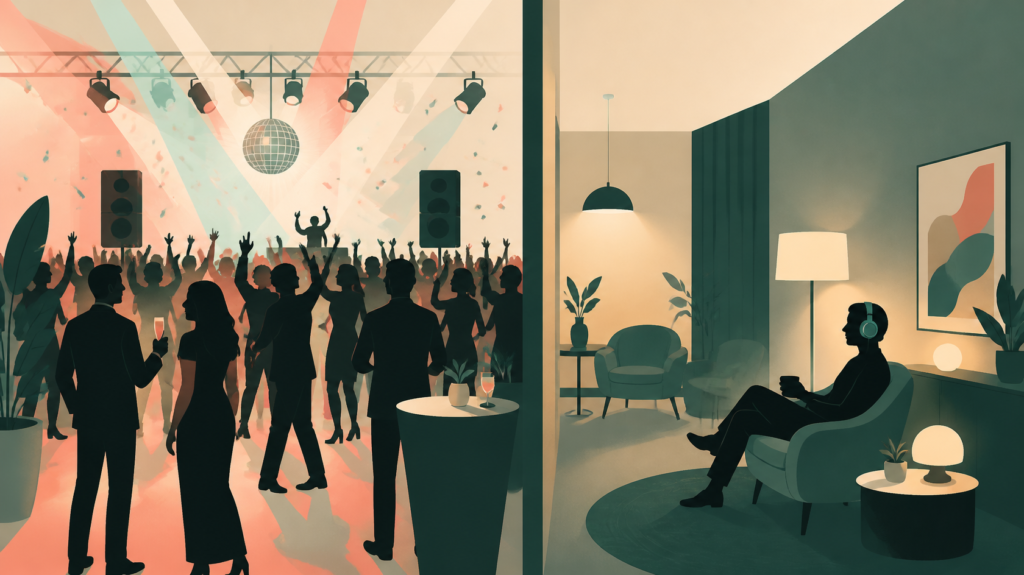
What it probably doesn’t have? A plan for the guest who hits sensory overload 40 minutes in.
That guest isn’t rare. Kantar’s 2024 MONITOR data puts neurodivergent Americans at about 18% of the U.S. population. That’s more than 60 million people (Kantar report).
And plenty of them aren’t coming to your event at all.
Through its partnership with EventWell, Google’s events team learned that 85% of neurodivergent attendees have opted out of an event for fear of becoming overwhelmed, triggered, or unwell (BizBash).
That’s not a niche accommodation problem. That’s an attendance problem. And sensory-friendly corporate events are how you solve it.
The Math Nobody Puts in the Planning Deck
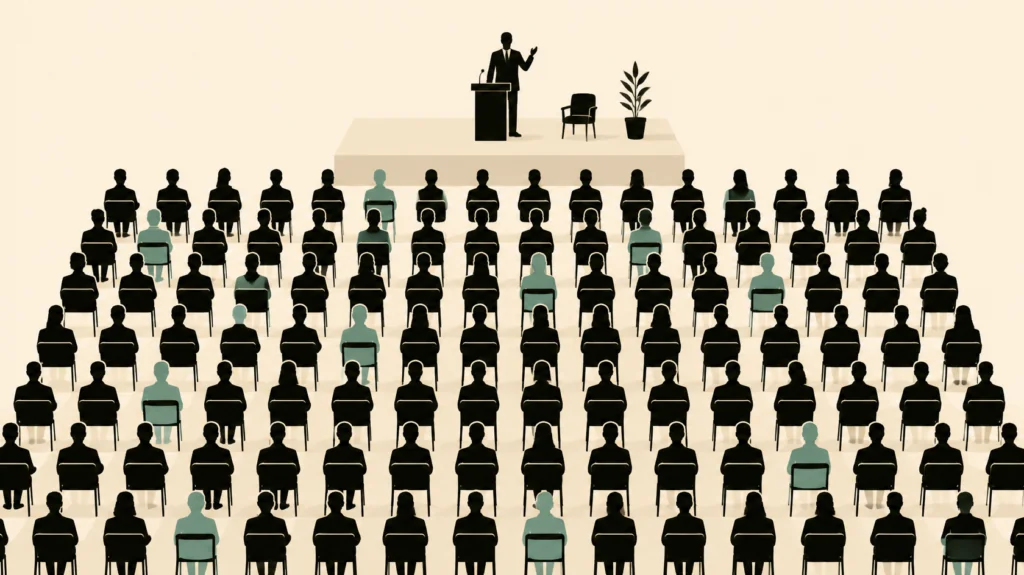
Most estimates land in the same place. Somewhere between 15 and 20% of people are neurodivergent. The Australian Psychological Society uses a slightly wider 10 to 20% range in its guide to hosting a neuroinclusive event.
Now run that against your guest list.
| Event size | Likely neurodivergent guests (15 to 20%) |
|---|---|
| 100 | 15 to 20 |
| 250 | 38 to 50 |
| 500 | 75 to 100 |
| 1,000 | 150 to 200 |
| 5,000 | 750 to 1,000 |
Read that 500 line again. Your next sales kickoff could have 75 to 100 people who process noise, light, and crowds differently.
They’re already on your list. Most of them just won’t say anything.
Not every neurodivergent guest has sensory sensitivities. And plenty of guests who aren’t neurodivergent do: the colleague with migraines, the introvert, the guest with hearing aids, the new parent running on four hours of sleep.
Design for the 20% and you make the room better for the other 80%.
It’s the same logic behind rethinking the open bar at your company holiday party. Build for the guests on the edges, and nobody feels like the exception.
What Sensory Overload Looks Like at a Corporate Event
The APS guide names the usual suspects: bright lighting, loud noise, strong scents, and crowded spaces. It also flags chaotic check-in lines and unpredictable schedules.
Translate that into a typical corporate event:
- The DJ set up right next to networking. Nobody can talk. Half the room gives up.
- The surprise walk-on. Strobes, bass drop, confetti. Fun for some. Fight-or-flight for others.
- The scented everything. Diffusers at registration. Candles on every table.
- The 8:45 a.m. check-in crush. One line, 400 people, everyone talking at once.
- The agenda that changes on the day. No warning. No updated map.
Here’s the thing. None of these are bad ideas. They’re just unannounced and inescapable.
Sensory-friendly doesn’t mean boring. It means guests get a warning and a way out.

Google and Marriott Already Made This Standard
This isn’t a fringe trend. Some of the biggest names in the industry moved years ago.
Google built sensory event kits through its Neu Project and opened them up to other planners through the Google Merch Shop in 2023. The kits include Loop earplugs with up to 16 dB of noise reduction, FL-41 tinted sunglasses for light sensitivity, a Tangle fidget toy, colored pencils, and a journal (BizBash).
Marriott followed in December 2023. Working with The Neu Project, it rolled out neuroinclusive practices at its customer events of 250 guests or more (BizBash). That includes:
- A dedicated quiet room for recovering from sensory overwhelm
- Optional tools at registration: fidget toys, noise-canceling earplugs, sleep masks, sunglasses
- Printed agendas and venue maps
- Advance notice of loud music, flashing lights, or surprise moments
- Real-time captioning on main stage presentations
If Marriott made this the baseline at 250 guests, your 800-person conference doesn’t get a pass.
It’s the same compliance curve we covered in The 2026 Corporate Event Planning Field Guide. DEIA is moving from optional to expected.
7 Low-Cost Moves for Sensory-Friendly Corporate Events
You don’t need a new budget line. Most of these are planning decisions, not purchases.
1. Send a “what to expect” guide before the event. Agenda, venue map, parking, food, and a heads-up on any loud or bright moments. Predictability is the easiest accommodation you can make.
2. Build a real quiet room. Not a storage closet with a folding chair. A dedicated room with dim lighting, soft seating, no programming, and clear signage. Mention it in your opening remarks so using it carries no stigma.
3. Zone your noise. Keep the DJ and main stage away from food and networking. Create a lower-volume path through the venue. If guests can’t hear each other at the bar, your networking budget is wasted anyway.
4. Warn before the wow. Pyro, confetti cannons, strobes, fog. Keep them if they fit your brand. Peak moments are what guests remember. Just put them in the run-of-show you send out, and announce them a minute before.
5. Skip the fragrance. No scented diffusers or candles. Ask your vendors whether anything they use has a strong odor.
6. Fix the check-in crush. Staggered arrival windows, digital check-in, and more than one line. The first 10 minutes set the tone for the whole event.
7. Ask once, at registration. Add one optional, private question: “Is there anything that would make this event more comfortable for you?” Route the answers to the people who can act on them. Offer earplugs or a sensory kit to anyone who asks.
Bonus: Brief your staff. Some guests wear a Hidden Disabilities Sunflower lanyard to signal they may need extra support. Your team should know what it means.
Planning for a college crowd instead? Our guide to inclusive campus events covers the student side.
How to Vet Activation Vendors for Sensory-Friendliness
You can nail every move above and still have one vendor undo it.
Your activations are the loudest, brightest, busiest spots in the room. That’s usually the point. So ask every activation vendor these questions before you sign:
- What does your setup sound like? Compressors, generators, music, microphones.
- Do any of your materials have a strong odor? Ask for safety data sheets.
- Can guests watch before they join? Low-pressure entry points matter.
- How do you manage your line? Fast and orderly beats long and chaotic.
- Is your station wheelchair accessible? Check the footprint, not just the venue.
- Are your staff trained to adapt for sensory needs? Ask what that training covers.
- Do you have a written DEIA or accessibility policy? It belongs on your vendor documents checklist next to your COI and contingency plan.
A vendor who answers these without hesitation has done the work. A vendor who says “nobody’s ever asked” just told you something important.
Where Live Customization Fits (The Honest Version)
We’ll be straight with you. Airbrush compressors aren’t silent. Any vendor who tells you otherwise is guessing.
What matters is whether your vendor plans for it. Here’s what that looks like at Airbrush Events:
- Placement planning. Tell us where your quiet room and keynote are. We’ll plan our station placement around them.
- Trained adaptation. Our AEAcademy-certified artists are trained to adapt their workflow for guests with sensory sensitivities or physical limitations, including managing noise levels and adjusting the height of the customization.
- Open footprint. Our stations are designed so guests using wheelchairs or mobility aids get a front-row view of the process.
- No-VOC paints. We use water-based acrylic paints with no volatile organic compounds. Safety data sheets are available on request.
- One guest at a time. The guest picks the design, watches it happen, and walks away with something they chose. No stage. No spotlight. No forced participation.
And because our teams are built for throughput, the line keeps moving. A short, orderly line is a sensory accommodation too.
Want to see how we plan for the rest of the what-ifs? Read our Reliability Promise.
Frequently Asked Questions About Sensory-Friendly Corporate Events
What is a sensory-friendly corporate event?
A sensory-friendly corporate event is designed so guests who are sensitive to noise, light, scent, or crowds can attend comfortably. It usually includes a quiet room, advance information about the schedule and loud moments, noise zoning, and trained staff. The goal is giving guests a warning and a way out, not removing the energy.
How many attendees at a corporate event are likely neurodivergent?
Most estimates put neurodivergent people at 15 to 20% of the population, and Kantar’s 2024 data puts the U.S. figure at about 18%. At a 500-person event, that’s roughly 75 to 100 guests. Not all of them have sensory sensitivities, but many do.
What should an event quiet room include?
A good quiet room has dim or adjustable lighting, comfortable seating, no music or programming, and clear signage. Some planners add earplugs, fidget tools, and water. Announce it at the start of the event so guests feel comfortable using it.
Are sensory-friendly accommodations expensive?
Most aren’t. The most effective changes are planning choices: sending a clear agenda in advance, placing loud elements away from networking, announcing surprises, and asking about needs at registration. Physical extras like earplugs or sensory kits are optional add-ons.
How do I ask attendees about sensory needs without singling anyone out?
Add one optional, open-ended question to your registration form and keep the answers confidential. Share them only with the staff who need to act on them. Offering the same tools to everyone also means no guest has to explain themselves.
The Bottom Line
- 15 to 20% of your guests may be neurodivergent, and many skip events they expect to be overwhelming.
- The fixes are cheap: a real quiet room, advance warnings, noise zoning, and a smarter check-in.
- Your vendors matter as much as your venue. Vet them for sensory-friendliness the same way you vet them for insurance.
Your one action item: before your next event, add one optional sensory question to your registration form. It costs nothing and tells you who’s really in the room.
The best events don’t just get people in the door. They make it easy to stay.
Planning a corporate event for 2027? Airbrush Events brings AEAcademy-certified artists, a documented DEIA policy, and a plan for every what-if. Get a quote for your next event.